
A sweater earns its place when it works with your usual clothes and the way you do laundry. Softness in a store is only one part of that decision. Before comparing colors, decide whether you need a light indoor layer, a roomy knit over a shirt, or something that fits comfortably under your coat.
Choose one everyday job
Think of the last few days you wanted another layer. Were you sitting in an office, walking to transit, or moving between a warm room and a cooler hallway? Choose the most common situation. A sweater bought for an imagined winter weekend may not solve the problem that sent you shopping.
Pull out two bottoms and one outer layer you already wear. Decide whether the new sweater needs to tuck in, sit above a waistband, or cover the hips. There is no required silhouette; the point is to give yourself a real outfit to evaluate instead of judging a knit in isolation.
Read the fabric label without treating it as a score
Check the full composition rather than the biggest word in the product name. Fiber content helps identify what you are buying, but it does not settle whether the finished garment feels good to you. Knit structure, thickness, and the way a piece is made also affect the experience of wearing it.
Touch the fabric where it will meet your skin, if the store permits. Check the neckline and cuffs as well as the body. If you normally wear a base layer, try the sweater that way. Do not assume that a more expensive fiber name guarantees comfort, or that every blend feels alike.
Test the neckline, sleeves, and room to move
Try the sweater over the layer you plan to wear underneath. Reach forward as if typing, bend your elbows, and put on your coat. Check whether the sleeves bunch, the neckline pulls, or the hem repeatedly needs adjusting. The mirror cannot answer all of those questions while you stand still.
Inspect the garment for loose threads, open seams, or snagged areas without pulling at the knit. Compare both cuffs and the hem. An intentionally relaxed shape is different from a damaged piece, so use the product description and another example on the rack if something looks inconsistent.
Choose a care routine you can maintain
Read the actual care label before buying. Woolmark’s care guidance directs readers to follow the garment’s care claim; do not assume every wool sweater can go through your usual wash cycle. If buying online, look for care instructions or ask the seller.
Consider the practical space and time you have for the stated routine. If an item needs a drying arrangement you cannot accommodate, that is a shopping constraint worth respecting. Do not buy it on the assumption that you will ignore the instructions successfully.
Compare outfits before comparing discounts
Imagine three combinations using clothes you own: perhaps jeans and sneakers, trousers and loafers, and a skirt with boots. This is a decision aid, not a rule that every sweater must satisfy. A special-purpose piece can still make sense if that purpose is real and frequent enough for you.
Before checkout, compare the sweater with your original job description. Does it fit under your existing coat? Can you wear the neckline comfortably? Can you follow the care label? For the next layer, use the coat try-on checklist rather than guessing how the two pieces will work together.
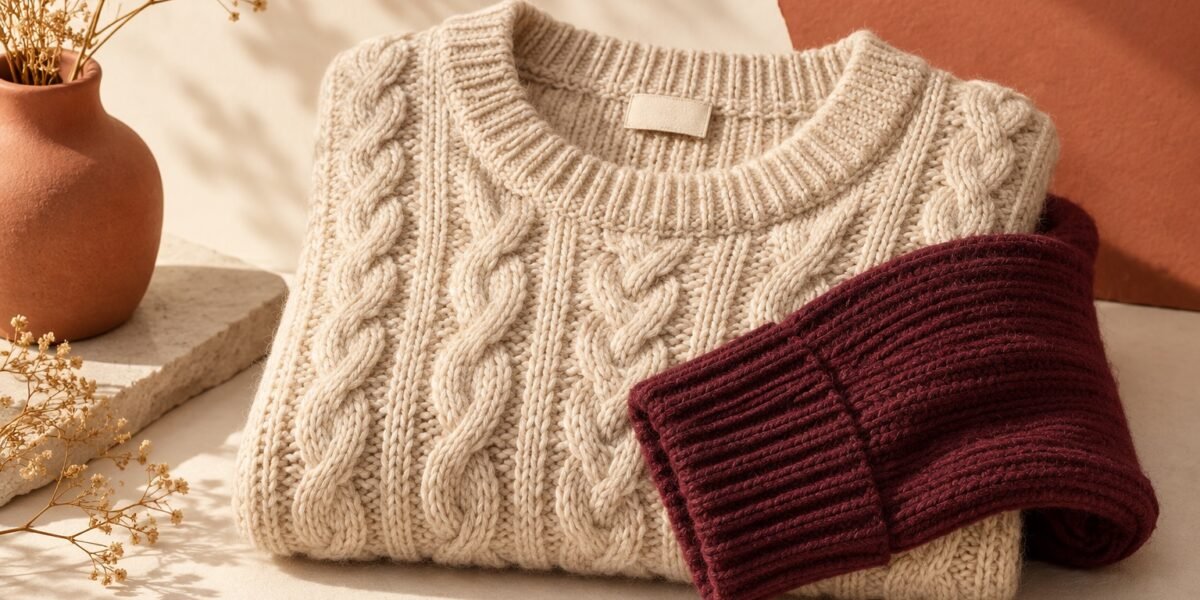
The cover is an AI-generated editorial illustration of generic items, not a photograph of a tested product.
Emma · Daycraftly
A good deal is more than a crossed-out price. I’m all about clever finds, useful products, and checking what you actually get for your money. From AliExpress discoveries to everyday essentials, my focus is on the details behind the offer: materials, features, seller information, and return terms. Think less impulse-buy clutter and more things you’ll be glad you found.
Join the conversation
Share a useful tip or ask a question. Comments are reviewed before publication. Your email address will not be displayed.



Leave a Reply