
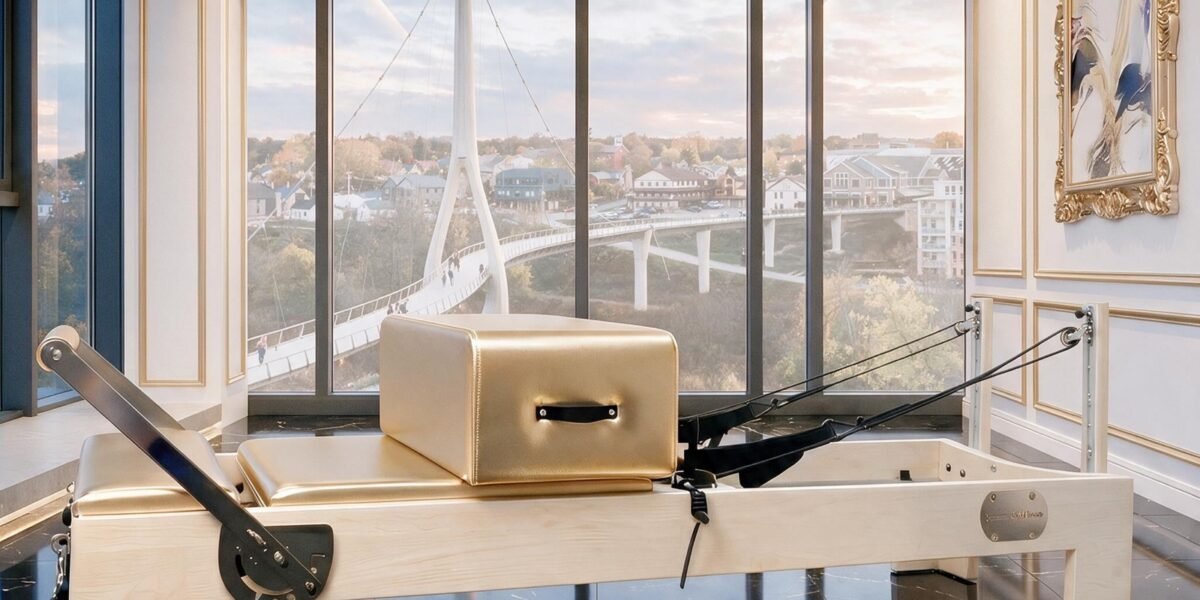
A home Pilates reformer is appealing for a simple reason: the session can start when you are ready, without a drive across town or a fully booked class. The harder question is which machine will actually fit your room, your routine, and your budget. A beautiful product photo cannot answer whether you will move the machine after every workout—or how it will get from the delivery truck into your home.
Affiliate disclosure: This article contains affiliate links. Daycraftly may earn a commission if you buy through them. This is a research-based review of PersonalHour’s published product information and policies, checked October 26, 2026. We have not personally tested these reformers or placed a test order. Product photography comes from the official listings; performance and durability claims have not been independently verified.
Our shortlist covers four different buying scenarios: a folding wooden reformer, another foldable option to compare on price and specifications, a larger studio-style machine, and a reformer with a tower. The goal is to help you arrive at PersonalHour with a clear shortlist and the right questions, rather than choose the most elaborate machine by default.
The quick verdict: worth a closer look if you know what you need
PersonalHour is worth considering if you want to compare several wooden reformer formats within one catalog. Its range includes foldable machines, larger studio-style designs, tower configurations, accessories, and replacement parts. That breadth is useful when you are deciding between a multipurpose room and a permanent exercise area. See the current PersonalHour catalog for the full range.
Our practical recommendation is to start with your available space and storage plan, then compare the exact configuration and delivered cost. Do not treat a high advertised capacity, included accessories, or the words “studio quality” as a substitute for confirming fit and construction details. Those are useful questions to investigate, not a hands-on verdict from us.
Read before buying: PersonalHour’s published refund policy classifies Pilates reformers as non-returnable unless the company explicitly approves an exception in writing. This makes advance checking especially important. If you want an equipment purchase with a simple change-of-mind trial, resolve that requirement before ordering.
Affiliate link: Daycraftly may earn a commission if you purchase through this link.
Four reformers to put on your shortlist
The following is a use-case comparison, not a scored ranking. Names refer to the linked product listings checked on October 26, 2026. Prices, options, upholstery, included extras, and availability can change; confirm the configuration in your cart. The photos below show the merchant’s presentation of each product, not equipment we tested.
| Model | Why shortlist it | Question to resolve first |
|---|---|---|
| Janet Elite Plus | Foldable maple-frame option | Can you safely fold and move it in your room? |
| Zous Pro | Foldable oak-frame alternative | How do its fit and full delivered price compare? |
| Nano Elite 2.0 | Larger studio-style setup | Do you have a permanent operating area? |
| Nano Elite Half Trapeze RE09 | Reformer with tower equipment | Do you need the tower and have adequate clearance? |
Janet Elite Plus: a folding option for a room with two jobs

PersonalHour describes the Janet Elite Plus as a foldable maple-wood reformer with six springs. Its product details list a 92-inch length, 24-inch width, and a folded footprint of 48 by 24 inches. The listing names a jumpboard, foot cushion, and Pilates box among the included accessories. Treat these as manufacturer-listed specifications and reconfirm them for the exact option you select.
The appeal is straightforward: you can consider a full-length machine without assuming it must occupy its exercise footprint all day. But folding is only useful if the storage routine works in real life. Ask for a folding demonstration, machine weight, approved storage position, and instructions for securing moving parts. A folded footprint does not tell you whether you can lift or maneuver the equipment comfortably.
This is the model to investigate if your guest room or office becomes your exercise area at certain times. Before ordering, map both locations and the route between them. If you must move furniture, negotiate a tight turn, or carry the machine over a threshold every time, a permanent setup—or continuing studio sessions—may be easier to maintain.
Zous Pro: compare the details, not just the headline price

The Zous Pro is another foldable option. PersonalHour describes an oak frame, integrated moving wheels, and a bundle that includes a box, jumpboard, foot cushion, and grip foot pad. Its listing gives shipping-box dimensions of 52.6 by 28.3 by 24.8 inches and a shipping weight of 197.3 pounds. That last figure describes the shipment, not a confirmed machine-only lifting weight.
Use it as a direct comparison candidate if foldability is your priority. Put the Zous and Janet side by side on your own checklist: frame dimensions, carriage travel, adjustment range, setup steps, total cost, and what arrives in the box. A less expensive cart is only better value if the machine meets the requirements you will notice in every session.
Ask support to distinguish package weight from equipment weight and confirm whether the crate can travel through your entrance. A large delivery can create more difficulty than the final room layout. In an apartment, elevator access and building delivery rules deserve as much attention as the space you have cleared beside the window.
Affiliate link: Daycraftly may earn a commission if you purchase through this link.
Nano Elite 2.0: consider it for a dedicated exercise space

The Nano Elite 2.0 listing emphasizes a white-maple frame, updated cushioning, and studio-style dimensions. Its specification section lists a total length of 92 inches, width of 27 inches, carriage length of 45 inches, and height of 14 inches. It also lists a jumpboard, foot cushion, and Pilates box. These details make it a useful candidate to investigate when you can leave equipment in place.
The practical benefit of a dedicated setup is less preparation before each session. You can keep the surrounding area clear and avoid designing your routine around repeated folding. The tradeoff is that the machine becomes a permanent part of the room. Think about doors, cleaning access, windows, and where you will store the box when it is not being used.
Do not judge body fit from frame length alone. Ask about usable carriage travel, shoulder-rest placement, footbar positions, and the adjustments relevant to your height. If you know the studio machine you enjoy using, write down what feels comfortable about it and use that as the starting point for your questions. Similar appearance does not guarantee similar movement or feel.
Nano Elite Half Trapeze RE09: only buy the tower if you will use it

PersonalHour’s Nano Elite Half Trapeze RE09 combines a reformer with a tower. The listing describes a maple frame, six springs, and a bundle including a jumpboard, box, foot cushion, push-through bar, and pull bar. This is a more involved setup to investigate if your established practice includes tower work and you have appropriate instruction.
There is a specification detail to clarify before buying: the page’s overview gives an 80 × 90 × 27-inch specification, while its separate dimensions section lists a 92-inch total length and 14-inch height. Those figures may refer to different parts or configurations, but the page does not make a single installation envelope clear. Request a labeled drawing with assembled tower height, total length, and operating clearance for your selected version.
A tower should solve a real training requirement, not simply make the purchase feel more complete. It adds a vertical space constraint and more setup decisions. If you are new to this equipment, work through the intended exercises and required instruction before choosing the configuration. We are reviewing purchasing considerations here, not prescribing workouts or spring settings.
Measure the room in three passes
First, map the working area. Use the confirmed equipment dimensions to mark the outline on the floor with removable tape. Then account for movement around the frame, getting on and off, using accessories, and the clearances specified by the manufacturer. The machine’s rectangle is not the complete exercise area. Open nearby doors and drawers to see what will conflict with it.
Second, check storage and access. For a folding model, identify exactly where it will go and how it will get there. Verify the approved storage orientation rather than assuming you can stand it upright. For any model, measure entry doors, hallways, stairs, and elevator openings. Request packaging measurements if you may need to move the shipment before unpacking it.
Third, check your everyday routine. Imagine a busy evening when you have limited time. How many steps separate you from starting? Where will the box, straps, and cleaning supplies live? A setup that is technically possible but awkward to use can turn into expensive storage. If useful, start with our weekly planning checklist to identify realistic time for the routine before buying equipment for it.
Calculate the cost of the whole setup
Compare the amount you will actually pay, not only the displayed starting price. Ask for the selected model and upholstery, freight charges, tax, any extra delivery service, assembly arrangements, and the accessories you genuinely need. Keep instruction and future maintenance separate from the equipment price so the budget remains understandable.
Illustrative math, not a PersonalHour quote: a $2,400 setup used twice a week for two years works out to about $11.54 per session over 208 sessions. At once a week, the same equipment cost becomes about $23.08 per session. This excludes instruction, upkeep, financing, and resale. It is a way to test your own usage assumptions, not a promise that buying a reformer will save money.
A home machine and an instructor-led class are different purchases. Keeping some guided sessions may be part of your plan even after buying equipment. Avoid counting every studio visit as money automatically saved. The more honest comparison is between two complete routines you would realistically follow.
Affiliate link: Daycraftly may earn a commission if you purchase through this link.
Delivery and returns deserve a close read
PersonalHour’s shipping policy says large equipment is typically delivered by freight to the curbside. Moving it beyond the delivery point is the customer’s responsibility unless additional services have been arranged. Delivery dates are estimates. Confirm the service for your address and organize help before the truck arrives; do not assume room-of-choice delivery or assembly is included.
Keep the packing materials while inspecting the shipment, photograph visible concerns, and follow the merchant’s reporting instructions promptly. Ask in advance how delivery appointments work, which documents you should retain, and what to do if packaging is damaged. Written answers are easier to refer back to than a general promise of fast shipping.
The published refund terms are restrictive: reformers are generally non-returnable without written approval. The policy lists cancellation fees and, for approved eligible returns, restocking fees of 25–40% plus customer-paid return freight. Do not interpret a return window elsewhere on the site as a trial period for a reformer. Get the applicable terms for your order in writing before paying.
Warranty is a separate issue. Read the limited warranty terms and ask which components, labor, freight, and replacement parts are covered for your intended home or studio use. Keep the invoice and model details. A defect policy does not automatically cover dissatisfaction with size, feel, or the decision to purchase.
What to ask PersonalHour before you order
Send one concise message with the exact model and option, your ZIP code, and the dimensions of your room. Ask for the current specification sheet, machine and packaged weights, assembly instructions, included items, delivery service, and estimated shipping date. For foldable models, request the folding instructions and approved storage position. For a tower, request a labeled assembled-height drawing.
Then ask what happens if a part arrives missing, who handles replacement shipping, and how the warranty applies to your intended use. Save the response alongside the product-page details. If a specification conflicts with another section of the site, resolve it before ordering rather than choosing the more convenient number.
Finally, consider the support information available before purchase. Can you find the manual? Are replacement parts identifiable by model? Are your questions answered precisely? These are useful signals to assess yourself. We have not independently tested the company’s response times or after-sales service.
Our buying recommendation
For a room that has to serve several purposes, begin by comparing Janet Elite Plus and Zous Pro. For a dedicated area, add Nano Elite 2.0 to the shortlist. Consider the Half Trapeze RE09 when you already have a reason to use tower equipment and can confirm the installation dimensions and instruction plan. This is a scenario-based shortlist, not a ranking of tested performance.
The best next step is to compare your top two configurations, request the unanswered details, and get a delivered-price estimate. PersonalHour’s variety gives you several starting points; a careful fit check turns that variety into a manageable decision. Buy when the machine, delivery plan, budget, and terms all work—not simply because a sale banner is persuasive.
Affiliate link: Daycraftly may earn a commission if you purchase through this link.
Sources and photo credits: PersonalHour’s official product listings linked beside each model, shipping policy, refund policy, and warranty terms. Information checked October 26, 2026. Merchant photographs are not Daycraftly testing photographs. Recheck specifications and policies before ordering.
Emma · Daycraftly
A good deal is more than a crossed-out price. I’m all about clever finds, useful products, and checking what you actually get for your money. From AliExpress discoveries to everyday essentials, my focus is on the details behind the offer: materials, features, seller information, and return terms. Think less impulse-buy clutter and more things you’ll be glad you found.
Join the conversation
Share a useful tip or ask a question. Comments are reviewed before publication. Your email address will not be displayed.

Leave a Reply