
A compact umbrella is useful only if it fits the place you intend to keep it. A model that feels small on a shop shelf can still be too long for a handbag pocket or awkward beside a laptop. Begin with the bag, route, and weather routine you already have.
This guide is a practical comparison checklist, not a ranking based on hands-on tests. It focuses on details you can verify before buying and questions to ask when a listing does not provide enough information.
Measure the space where it will travel
Check the usable length and opening of the pocket or compartment you plan to use. Allow room for the handle and the sleeve, not just the folded canopy. If the umbrella will share a compartment with electronics or paper, think about where it will go after use while wet.
For a bag you carry daily, consider the umbrella alongside your usual load rather than in isolation. Our everyday backpack checklist uses the same approach: start with the objects that must fit, then compare the available space.
Compare folded size and open coverage separately
Look for both the closed length and the open canopy diameter. One tells you about carrying; the other helps you picture the space overhead. Check weight as a separate field rather than assuming that two folding umbrellas will feel similar in a loaded bag.
As an example of useful specifications, BLUNT’s model comparison lists the Metro at 37.5 cm folded, with a 100 cm diameter and a weight of 385 g. Those are manufacturer figures, not measurements from our testing. The example shows what to look for in a listing; it is not a recommendation that everyone buy that model.
Try the handle and opening controls
If a shop permits it, open and close the umbrella in a clear space following the product instructions. Check whether the handle feels secure in your hand and whether you can operate the button or release comfortably. Keep the opening canopy away from other people and nearby objects.
An automatic opening mechanism may suit one routine, while a manual one may suit another. Read exactly what the mechanism does: a product described as automatic may not perform every part of closing or resetting for you. Ask to see the process rather than making assumptions from the label.
Plan for the wet umbrella
Consider the moment you enter a train, office, or shop. Can you close the umbrella without wrestling with the strap? Is the sleeve easy to put on? Where can it be placed temporarily without wetting the contents of your bag? A sleeve’s presence alone does not establish that it is watertight.
Check the manufacturer’s drying and storage instructions. Make space to follow them at home, instead of choosing a bag arrangement that requires leaving a damp umbrella sealed away indefinitely. Your entryway drop zone can include a suitable temporary place for rainy-day items.
Read the claims and compare the complete purchase
Treat phrases such as “windproof” as claims to investigate, not promises that an umbrella is suitable for every condition. Look for the manufacturer’s stated limitations, care instructions, repair options, and warranty terms. A headline test claim is not a reason to ignore local weather warnings or use a damaged product.
Compare the final price, delivery, return conditions, and any accessories you actually need. If two options fit your routine, the simpler one may be enough. There is little benefit in paying for extra coverage that makes the umbrella so awkward that you leave it at home.
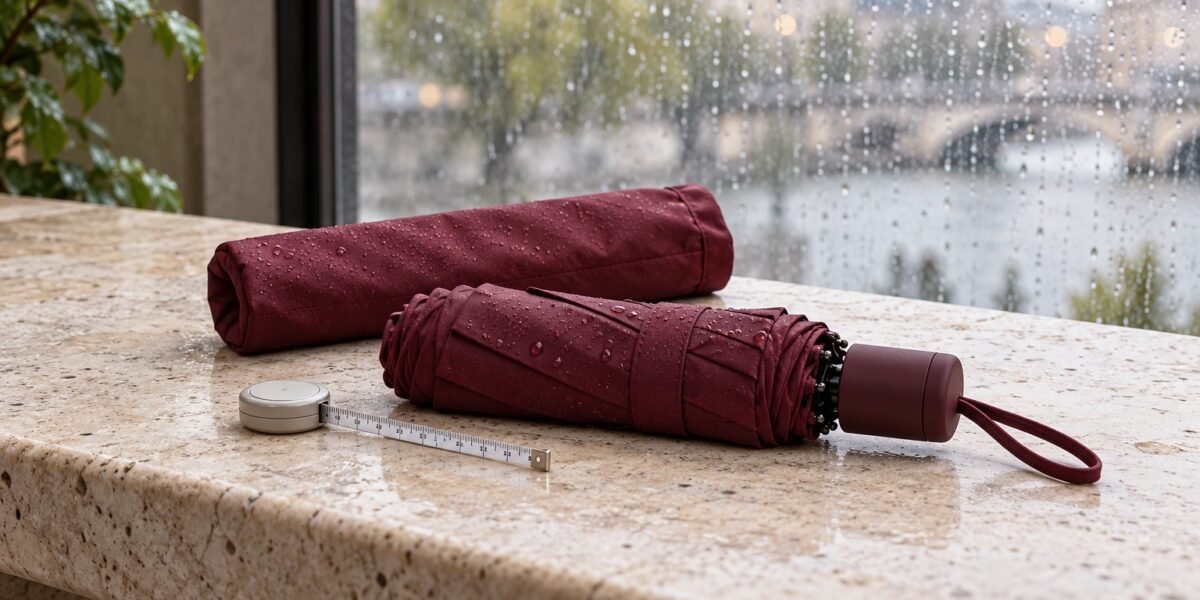
Manufacturer specifications checked October 3, 2026. No prices or availability are asserted. The cover is an AI illustration of a generic umbrella, not a photograph of the BLUNT Metro.
Emma · Daycraftly
A good deal is more than a crossed-out price. I’m all about clever finds, useful products, and checking what you actually get for your money. From AliExpress discoveries to everyday essentials, my focus is on the details behind the offer: materials, features, seller information, and return terms. Think less impulse-buy clutter and more things you’ll be glad you found.
Join the conversation
Share a useful tip or ask a question. Comments are reviewed before publication. Your email address will not be displayed.



Leave a Reply