
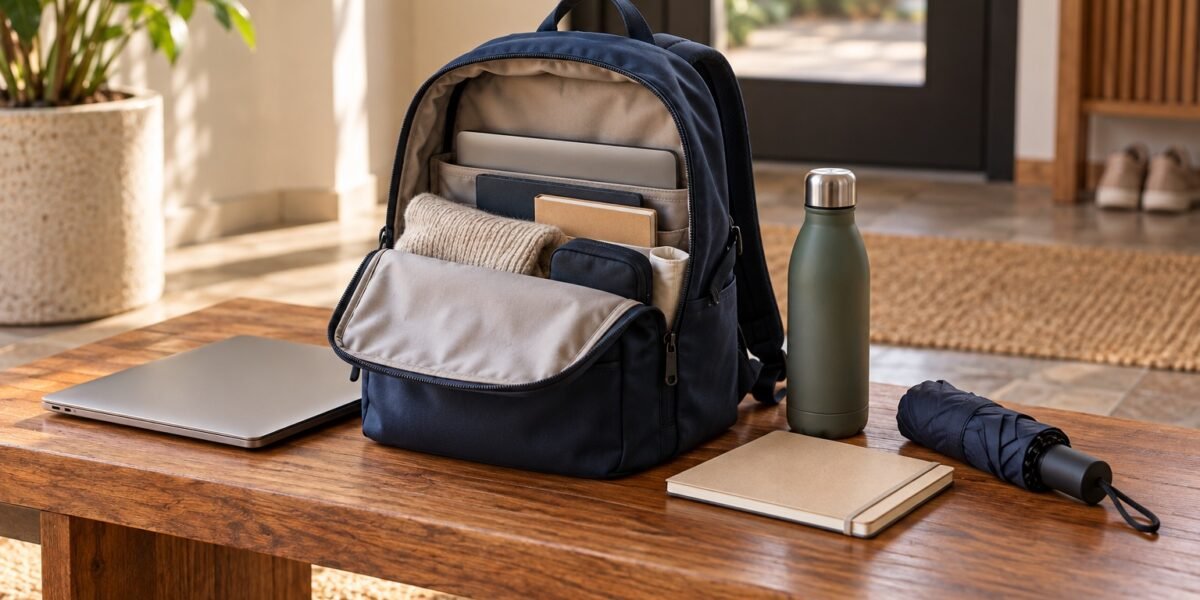
An everyday backpack has to work on an ordinary Tuesday. Before comparing colors or pocket counts, lay out what you usually carry: a laptop if needed, keys, a bottle, lunch, and any extra layer. That small pile is a more useful starting point than a photograph of someone else’s neatly packed bag.
This is a buying checklist rather than a ranking of tested products. It can help you compare options in a shop or narrow an online shortlist without assuming that the largest bag, most expensive fabric, or greatest number of compartments is automatically best.
Build a realistic daily load
Separate everyday essentials from things you take occasionally. If you only carry gym shoes once a week, decide whether they must fit inside the same bag or whether a separate tote already solves the problem. Include the cases and pouches you normally use; a bare laptop takes up less space than a laptop in a sleeve.
Check what could leak, get dirty, or scratch another item. Think about where each item would go and whether you could remove it without unpacking everything. You are looking for a layout that matches your habits, not a reason to buy a collection of new organizers.
Check dimensions, not just the capacity label
A stated volume is useful for comparing the rough scale of bags, but it does not describe the shape of the main compartment or its opening. Read the exterior measurements and, where available, the usable laptop-compartment dimensions. Measure your device with its case if you intend to leave that case on.
For example, Osprey’s Ozone Laptop Backpack listing describes its sleeve as fitting most laptops up to 16 inches. That is a compatibility claim from the manufacturer, not a guarantee that every device with that screen size will fit. Check your particular device and ask the seller for compartment measurements if the fit is unclear. This example is not a product recommendation or hands-on review.
Try the openings and everyday pockets
Picture the moments when you reach into the bag: taking out a pass, finding keys, getting a bottle, or removing a laptop at your desk. Check whether the relevant pockets remain accessible when the main compartment is full. A pocket that looks generous in an empty bag may be less convenient beside a bulky lunch container.
- Can you reach small essentials without exposing the whole main compartment?
- Does your bottle fit the intended pocket and stay in place during normal movement?
- Can you remove the laptop without catching its case on the opening?
- Is there a sensible place for a damp umbrella, separate from electronics?
You do not need a dedicated pocket for every object. One clear main space and a familiar pouch may suit you better than several small compartments you rarely use.
Assess the bag with a representative load
Where a shop permits it, try the backpack with a load similar to your usual one. Adjust the straps, walk a little, and notice whether the bag shifts, pulls, or gets in the way of your arms. Check that you can operate the zippers and handle comfortably. An empty display bag cannot answer all of those questions.
For online purchases, read the return conditions before ordering and keep packaging and tags while checking the fit indoors. Follow the seller’s rules about testing and returns. Avoid interpreting fabric descriptions as promises that electronics will stay dry in every situation; look for the manufacturer’s specific care and weather-protection guidance.
Compare the total purchase, then stop
Make a shortlist with the same few fields: dimensions, device fit, empty weight if listed, useful pockets, price, delivery, and return terms. Include any sleeve or rain cover you would need to buy separately. A cheaper bag may still be the right choice, but compare the actual setup you intend to use.
Once a bag meets your needs, resist adding features for hypothetical trips. Keep a reusable packing checklist for the items that belong inside it. Product information checked October 2, 2026. The cover is an AI illustration of a generic backpack, not a photograph of the Osprey model.
Emma · Daycraftly
A good deal is more than a crossed-out price. I’m all about clever finds, useful products, and checking what you actually get for your money. From AliExpress discoveries to everyday essentials, my focus is on the details behind the offer: materials, features, seller information, and return terms. Think less impulse-buy clutter and more things you’ll be glad you found.
Join the conversation
Share a useful tip or ask a question. Comments are reviewed before publication. Your email address will not be displayed.



Leave a Reply