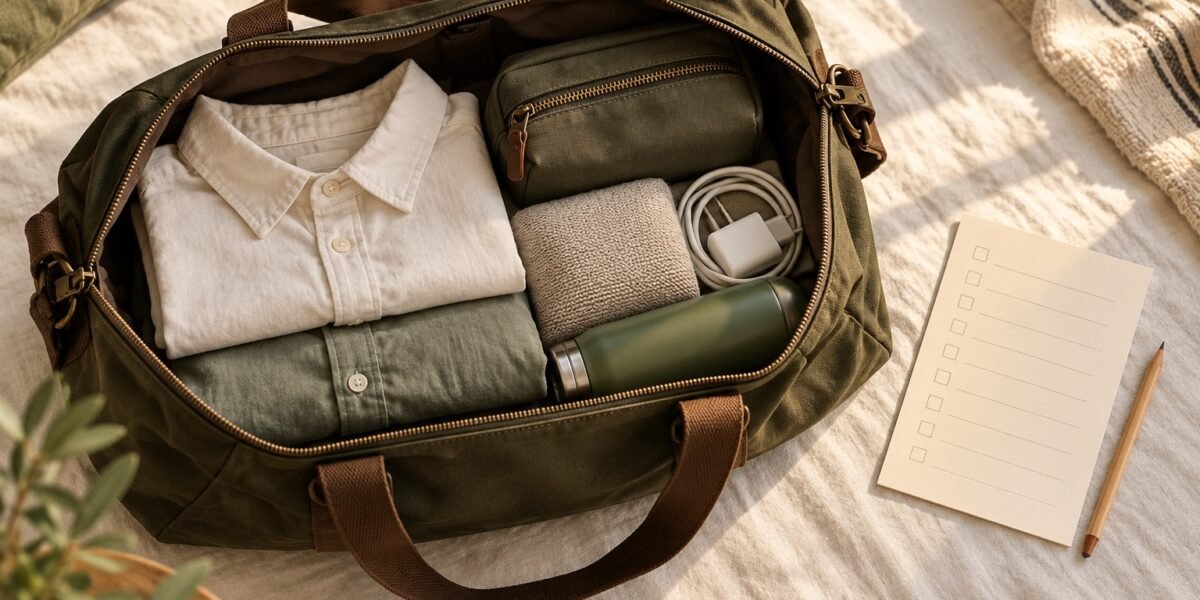
Packing from memory can produce an odd combination: several items you never use and one ordinary thing you meant to bring. A reusable checklist gives you a starting point, while leaving room for the particular trip.
Build the list from your own plans and past trips. It should not be a universal inventory of everything a traveler might need. The useful version is short enough to review and specific enough to remind you of what matters.
Write down what this trip requires
Start with the length of the trip, planned activities, transport, and what will be available where you stay. Check the expected conditions close to departure. A work visit, an overnight family stay, and a walking weekend may need very different clothing and equipment.
If you are flying or crossing a border, check current carrier and official entry requirements for your route. This checklist does not replace those rules. Record any trip-specific requirement in a separate section so it does not quietly become a permanent rule for every future trip.
Create a short master list
- Documents and access: the items actually required for this trip, booking details, and keys.
- Clothing: complete outfits for the planned activities, plus an appropriate spare.
- Personal essentials: toiletries and the personal items you normally need.
- Technology: necessary devices, compatible chargers, and any confirmed destination-specific accessories.
- Trip-specific items: equipment for the activities you have actually planned.
Use exact names where ambiguity causes mistakes. “Charger” may not remind you to pack the correct cable for a work laptop. “Documents” may hide an item that needs to be checked or obtained well before departure. Keep sensitive document details out of a casually shared checklist.
Pack for combinations rather than isolated items
Lay out clothing as combinations for the activities on your itinerary. Notice whether several items serve the same purpose or whether an outfit is missing a necessary piece. Adjust for the trip and your preferences instead of following an arbitrary item count.
For a two-night visit with one work meeting, you might plan a travel outfit, the meeting outfit, and comfortable clothes for the evening. That is an example of planning by use, not a prescription about how many clothes everyone should carry.
Separate packed from still needed
Use two clear states: packed and still to pack. An item lying beside the bag is not packed. Check it off when it is actually inside the bag or in the place you will carry it. This distinction is especially useful when packing in several short sessions.
Keep a separate last-minute section for items still in use, such as a phone charger, glasses, or a toiletry bag. Put the list somewhere you will see before leaving. Do not depend on remembering which unchecked items were intentionally left until morning.
Run a departure check
Read the last-minute section, check the essentials you must carry personally, and make sure the bag is appropriate for your transport. Confirm arrangements that affect the journey, such as a pickup time or access instructions. Put your keys and bag in a place that supports a clear departure.
If belongings tend to disappear into different rooms before you leave, an entryway drop zone can provide a defined place for outgoing items. Keep important documents and valuables appropriately secure rather than leaving them unattended by the door.
Improve the list after you unpack
Note what you used, what you missed, and what was unnecessary for that type of trip. Remove an item from the master list only when it is no longer useful as a general reminder; keep special requirements in the trip-specific section.
Store the master list somewhere you can find it again and make a fresh copy for each trip. That preserves a reusable starting point while allowing this journey to have its own checked items and exceptions. Add preparation tasks to your weekly calendar reset before departure approaches.
Join the conversation
Share a useful tip or ask a question. Comments are reviewed before publication. Your email address will not be displayed.



Leave a Reply