
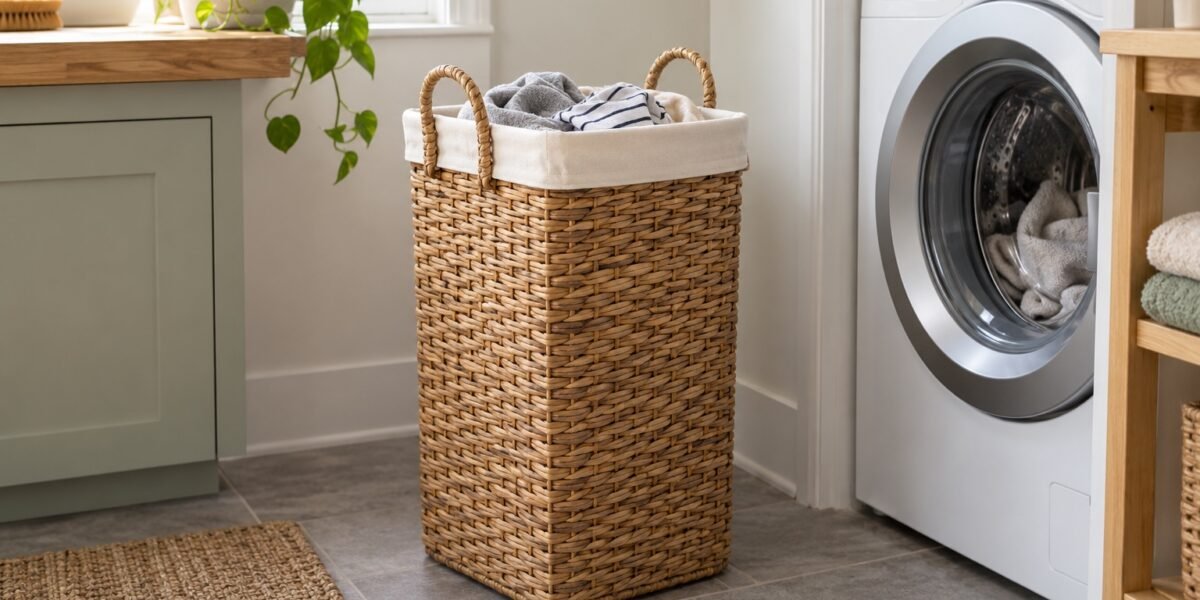
A laundry hamper has two jobs: holding clothes between washes and helping you move them when laundry day arrives. A design that fits a corner can still be awkward to lift, clean, or empty. Shop for the whole route from bedroom to washer, not just the space beside your dresser.
Measure the footprint and opening space
Measure the available width and depth at floor level, including baseboards or other projections. Then check the height beneath any shelf or counter. Use a paper or cardboard outline on the floor to see whether the proposed hamper blocks a door or narrows a route you use every day.
Look beyond the closed dimensions. A lid needs room to open, a liner needs room to lift out, and a tilt-out unit needs clearance in front. If the product page gives only the outside size, ask about the opening mechanism before assuming it will work under a low shelf.
Choose how the clothes will travel
Think through the trip to the washer. Will you carry the whole hamper, remove a bag, or transfer clothes into a separate basket? For stairs or a shared laundry room, the carrying method can matter more than a decorative finish. Check whether the handles belong to the frame, the liner, or both.
If you can inspect the item, grip the handles and check for sharp edges or an awkward span. Avoid treating a tall empty hamper as evidence that you can comfortably carry it when full. Follow the stated load limit, and choose a smaller load when necessary rather than overfilling it.
Make sorting match your real laundry routine
Divided hampers are useful only if the compartments match the way you sort. Two large sections may suit one household, while another needs a single flexible space and separate sorting on laundry day. Check the usable size of each compartment, not just the total capacity.
A narrow compartment may fill quickly with bulky bedding even when the neighboring section is empty. Draw your typical load on paper: everyday clothes, towels, and occasional larger items. Choose a layout that accommodates those items instead of buying extra compartments because they look organized.
Check the liner and cleaning method
Look for instructions for cleaning both the outside and the liner. A removable bag is not automatically machine washable. Confirm its care requirements, how it attaches, and whether it can be removed without dismantling the entire frame. If replacements are sold, note the exact size or model.
Also consider what happens when something leaks or snags. A surface you can access is easier to inspect than a hidden seam behind a fixed insert. Do not use the hamper as long-term storage for wet laundry; follow garment-care guidance and avoid leaving damp items bundled together.
Decide whether a lid solves a problem
A lid can hide laundry from view, but it adds another action every time you use the hamper. Test whether you can open it from the position where you normally change clothes. Check whether the lid stays supported as intended or must be held while you load items.
An open basket may be the simpler choice inside a closet; a covered design may better suit a visible room. Neither replaces a sensible washing routine. If floor space is the real issue, compare the hamper with your other storage dimensions before buying a bigger container.
Run a laundry-day rehearsal before keeping it
Within the seller’s permitted inspection conditions, place the empty hamper in its intended spot. Open the door, reach for the lid, remove the liner, and walk the route to the washer. Notice tight turns and where you would need to set it down.
As a simple decision rule, the hamper should fit the room, suit the carrying route, and be cleanable with a method you will actually use. If one of those fails, choose a different shape or capacity. A good fit should remove a daily inconvenience rather than move it to laundry day.
Cover: AI-generated illustrative scene, not a photograph of a specific product.
Emma · Daycraftly
A good deal is more than a crossed-out price. I’m all about clever finds, useful products, and checking what you actually get for your money. From AliExpress discoveries to everyday essentials, my focus is on the details behind the offer: materials, features, seller information, and return terms. Think less impulse-buy clutter and more things you’ll be glad you found.
Join the conversation
Share a useful tip or ask a question. Comments are reviewed before publication. Your email address will not be displayed.



Leave a Reply