
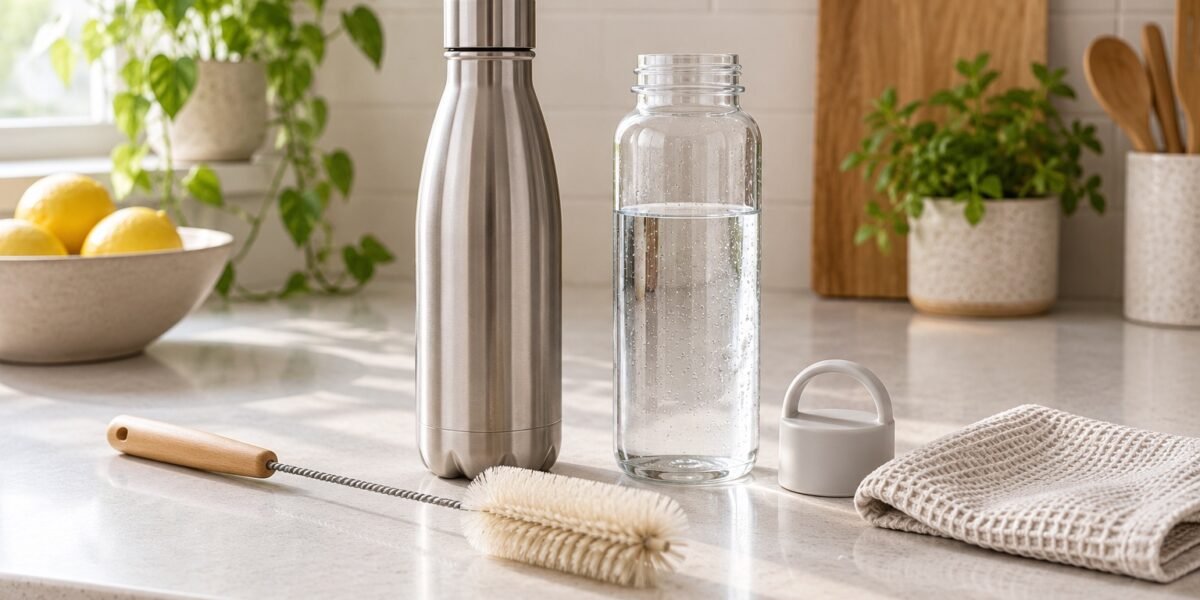
A bottle can look perfect online and still be annoying to carry or clean. Before comparing colors or insulation claims, decide where it will spend most of the day: on a desk, in a bag pocket, or beside you during an activity.
This is a practical buying checklist, not a hands-on product ranking or advice about how much water to drink. It helps you compare the physical details that determine whether a bottle fits your routine.
Start with the place you will carry it
Measure the pocket or holder you intend to use and check the bottle’s listed dimensions, including the cap. Capacity alone does not tell you whether it fits. Two bottles that hold the same amount can have different shapes, widths, and handles.
Think about where you can refill and how much weight you want to carry. You do not need to choose the largest option simply because it is available. If the bottle will share a bag with electronics, examine the manufacturer’s closure and leak-resistance claims carefully, including any conditions attached to them.
Choose a lid you can use and maintain
Look at the actual opening mechanism: a screw cap, flip lid, straw, or valve creates a different daily routine. Consider how the bottle will be opened, carried, and put away. If possible, inspect the cap in person and check whether it is comfortable for you to operate.
A more complicated lid may include extra parts that need attention. Ask how those parts come apart, whether the instructions are clear, and whether replacements are available for the exact model. A feature is only useful if you are willing and able to maintain it.
Read the cleaning instructions before buying
Check the care instructions for both the vessel and lid. Do not assume every part of a brand’s range has the same dishwasher rules. The material, finish, and mechanism can affect the manufacturer’s instructions, so use the guidance for the specific product you are considering.
For example, CamelBak’s care page distinguishes hand washing for Podium and Podium Chill bottle bodies from top-rack dishwasher cleaning for their caps. This is an example of component-specific guidance, not a recommendation of those bottles. Confirm the current instructions supplied with your exact model.
Check the full set of dimensions and accessories
An opening that works for drinking may be less convenient for your usual cleaning tools. Check whether the bottle brush you use can reach the interior and whether the cap can be dried as instructed. Avoid improvising a cleaning method that the manufacturer does not permit.
- Does the complete bottle fit your everyday bag?
- Can you remove and reassemble the parts according to the instructions?
- Are replacement caps or seals available for this exact model?
- Are any needed accessories included in the price?
If you will use drinks other than water, check whether the product is intended for them. Do not infer suitability for hot or carbonated drinks from appearance, material, or the presence of insulation.
Compare the routine, not just the headline feature
Make a shortlist using the same fields for each option: dimensions, capacity, empty weight if listed, lid type, care method, and complete purchase cost. Read the seller’s return terms before buying, especially if you cannot check the fit in person.
Once the bottle fits your needs, give it a place in your evening preparation and follow its care instructions. Manufacturer guidance checked October 4, 2026. No prices or availability are asserted; the cover shows AI-generated generic bottles, not the cited CamelBak models.
Emma · Daycraftly
A good deal is more than a crossed-out price. I’m all about clever finds, useful products, and checking what you actually get for your money. From AliExpress discoveries to everyday essentials, my focus is on the details behind the offer: materials, features, seller information, and return terms. Think less impulse-buy clutter and more things you’ll be glad you found.
Join the conversation
Share a useful tip or ask a question. Comments are reviewed before publication. Your email address will not be displayed.



Leave a Reply