
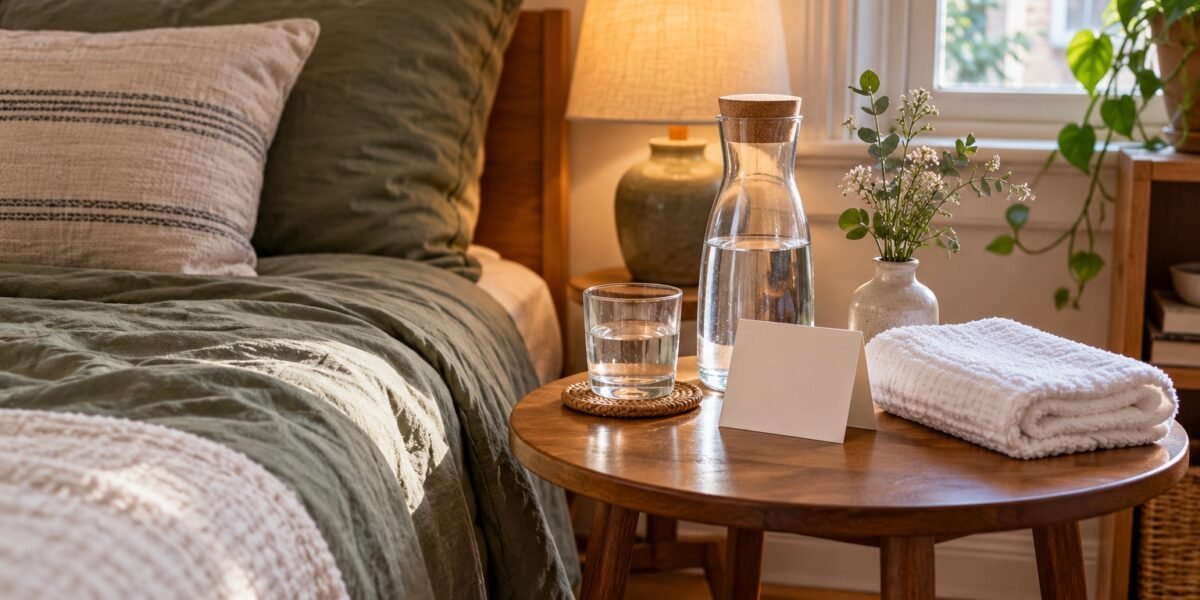
You have shown a guest around, handed over a towel, and explained the coffee maker. Later, they cannot remember which switch controls the hallway light, and they hesitate to ask again. A short home guide gives them somewhere to check the ordinary details without turning a visit into a set of instructions.
Make it one page, with short headings and plenty of space. You can print a copy for the guest room or send a simple document privately. Its job is to help someone feel comfortable in your home, not to list every household preference or replace a welcoming conversation.
1. Start with the guest’s first few minutes
Write down the details someone needs on arrival: where to leave shoes and bags, where the bathroom is, and which room is theirs. If the entrance is difficult to find, send arrival directions separately before the visit. A guide sitting inside the home cannot help someone waiting outside it.
Give objects recognizable names. “The basket below the hallway bench” is easier to follow than “our usual storage spot.” If your entry area is crowded, make a little room before writing instructions. A clear entryway drop zone often removes a question without adding another line to the guide.
2. Include the everyday essentials
Add the guest Wi-Fi network, the location of drinking glasses, spare towels, and a charging outlet. Share a Wi-Fi password only through a private copy or directly with the guest; do not put it in a publicly accessible document. Keep alarm codes, lockbox codes, and other security details out of a reusable general guide.
For an unfamiliar appliance, include only the simple operation a guest will actually need. “Mugs are above the kettle; tea is in the left drawer” may be enough. If a machine has a complicated cleaning cycle or a sensitive control, demonstrate it instead of expecting someone to learn from a paragraph.
3. Explain routines that affect another person
Mention an early work call, a shared bathroom schedule, or a pet that must stay indoors. Phrase these details as helpful context: “I have a call in the living room from 8 to 8:30; the kitchen is free.” That tells the guest how to plan without making the entire house feel restricted.
Discuss food preferences and accessibility needs directly before the visit. A printed note is a poor substitute for that conversation. If several people share the home, confirm the arrangements together so the guide does not contradict what another household member expects. A shared calendar can help coordinate timing privately.
4. Add a small, usable contact section
Provide the best way to reach you and explain what to do if you are temporarily unavailable. For example, a text may work during the day while a phone call is better for something urgent. Include your address in a private guest copy if someone might need to give it to a driver or emergency dispatcher.
Keep safety instructions accurate and specific to the home. Show the guest the exit and any relevant equipment in person. Avoid vague reassurance such as “everything is easy to find.” If you cannot describe a necessary procedure clearly, resolve that problem before the visit rather than giving the guest a guessing task.
5. Use this short example as a starting point
Welcome: your room is the first door on the right; bags can go on the empty bench. Kitchen: glasses are above the sink; help yourself to the fruit bowl. Bathroom: extra towels are on the lower shelf. Morning: I leave at 8:15, but there is no need to get up then. Contact: text me if you cannot find something.
Replace every detail with what is true in your home. Delete sections that do not apply. Add a brief departure note only if needed, such as where to leave a borrowed key. Guests should not have to interpret a long list of cleaning duties to know how to end their stay.
6. Walk through the page before sharing it
Read the guide while standing where a guest would stand. Can you see the shelf it describes? Does the named light switch actually do what you wrote? Remove outdated instructions, check links in a digital copy, and make sure the text is readable without zooming.
After the visit, note the questions that still came up. Add the one missing detail that would help next time and remove information nobody needed. A good home guide becomes more welcoming as it gets clearer, rather than longer with every guest.
Cover: AI-generated editorial illustration.
Emma · Daycraftly
A good deal is more than a crossed-out price. I’m all about clever finds, useful products, and checking what you actually get for your money. From AliExpress discoveries to everyday essentials, my focus is on the details behind the offer: materials, features, seller information, and return terms. Think less impulse-buy clutter and more things you’ll be glad you found.
Join the conversation
Share a useful tip or ask a question. Comments are reviewed before publication. Your email address will not be displayed.


Leave a Reply